
How to Prepare Towels and Sportswear for Laundry
Air damp items, empty pockets, separate lint-producing towels and check heat limits before sending sportswear to the laundry.
Learn what washing, bleaching, drying, ironing and professional-care symbols mean before handing delicate clothing to a laundry service.

How to Read Laundry Care Labels and Drying Symbols gives customers a practical way to prepare and confirm laundry service in Da Nang. Learn what washing, bleaching, drying, ironing and professional-care symbols mean before handing delicate clothing to a laundry service. The guidance prioritises care labels, the actual condition of each item and details confirmed in writing. It is intended to support a clear handover and realistic expectations, not to promise that every fabric, stain or special item can use the same process.
Start with laundry service in Son Tra and confirm the service details that apply to your order.
The wash-tub symbol describes washing instructions. A number generally indicates a maximum temperature, while lines beneath the tub suggest a gentler process. A hand in the tub indicates hand washing or very gentle handling, and a crossed-out tub means the item should not be washed by that method. Read the whole label rather than one icon in isolation.
Keep every instruction in the same booking conversation so pickup, processing and return teams use one record. Send a clear care-label photo when an item needs special handling.
The triangle relates to bleaching. An empty triangle, a lined triangle and a crossed-out triangle have different meanings. White fabric is not automatically bleach-safe. Follow the manufacturer's symbol and never apply a strong product only because a stain is visible. When testing is permitted, use an inconspicuous area and stop if colour or texture changes.
A faster deadline must not override the manufacturer's care instructions. Ask the laundry to confirm what can be completed safely before the order is accepted.
A square containing a circle is the tumble-drying group. Dots normally indicate relative heat, while a crossed-out symbol means no tumble drying. Elastic fibres, coated fabric, glued decoration and printed transfers can be especially sensitive. A faster return should not be achieved by exceeding the label's drying limit.
Photos support an initial review but do not always show fabric, damage or moisture accurately. Final timing and price should follow the physical inspection and weighing.
Related guidance: laundry tips for travellers in Da Nang.
The iron symbol shows whether ironing is allowed and the relative heat level. More dots do not mean a better result; they indicate a higher permitted setting for suitable fabric. Excess heat may shine, distort or melt fibres and prints. Steam restrictions may also appear, so read the complete symbol before pressing a special garment.
Remove valuables and record the number of bags before handover. A short written confirmation is useful when hotel reception is acting on the guest's behalf.
A circle usually refers to professional textile care. Letters and bars give technical information to the cleaner about compatible processes. A customer does not need to guess the chemistry. Photograph the complete label and let the laundry determine whether it offers the required method or should decline the item.
Separate priority items from special or delicate pieces. This makes it easier to return the essential clothes first without applying an unsuitable process to the whole bag.
Ask for review when the label is faded, missing, contradictory or attached to a garment made from several materials. Mention price-sensitive or sentimental pieces and visible damage. Cherry Laundry can review the label and item condition, but the manufacturer's instruction remains the primary care reference and some items may not be accepted.
Check the returned order before packing for travel. Allow warm items to cool in a ventilated space before placing them in an airtight suitcase.
A garment may use several materials and show instructions that seem difficult to combine—for example, a washable outer fabric with decoration that should not be tumble-dried. Do not select only the most convenient symbol. Treat the most restrictive relevant instruction as a warning and ask how the complete item will be handled. Seams, lining, print, adhesive and filling can be more sensitive than the main fabric named on the label.
If the label has been cut out, search only official manufacturer guidance for the exact product when possible and still disclose that the physical label is missing. Online advice for a similar-looking garment is not proof that the construction is identical. For high-value or sentimental pieces, consider specialist care. The correct outcome may be a slower method or a decision not to accept the item, rather than an aggressive process.
Photograph the whole garment and a sharp close-up of every care symbol. In the booking message, identify the fabric, decoration, damage and any previous treatment. Ask the laundry to confirm whether its available process matches the label before mixing the item with the regular wash-and-dry bag.
Yes. Urgency does not override the manufacturer's restriction; another safe method or more time may be required.
Send photos and describe the material and construction. The laundry may need to inspect the item or decline it if the risk is unclear.
The team can review common labels, but the manufacturer's official guidance and specialist care requirements take priority.
Care symbols turn a vague request into clear processing limits. A readable label photo helps Cherry Laundry decide what can be accepted and prevents urgency from replacing safe garment care.
Next step: contact Cherry Laundry.
Service details may change. Reconfirm price, pickup range, capacity and the phone number shown on the official profile before publishing or booking.
The questions and answers below are automatically summarized from this article.
Confirm washing symbols. Confirm bleaching symbols.
The wash-tub symbol describes washing instructions. A number generally indicates a maximum temperature, while lines beneath the tub suggest a gentler process. A hand in the tub indicates hand washing or very gentle handling, and a crossed-out tub means the item should not be washed by that method. Read the whole label rather than one icon in isolation. Keep every instruction in the same booking conversation so pickup, processing and return teams use one record. Send a clear care-label photo when an item needs special handling.
The triangle relates to bleaching. An empty triangle, a lined triangle and a crossed-out triangle have different meanings. White fabric is not automatically bleach-safe. Follow the manufacturer's symbol and never apply a strong product only because a stain is visible. When testing is permitted, use an inconspicuous area and stop if colour or texture changes. A faster deadline must not override the manufacturer's care instructions. Ask the laundry to confirm what can be completed safely before the order is accepted.
A square containing a circle is the tumble-drying group. Dots normally indicate relative heat, while a crossed-out symbol means no tumble drying. Elastic fibres, coated fabric, glued decoration and printed transfers can be especially sensitive. A faster return should not be achieved by exceeding the label's drying limit. Photos support an initial review but do not always show fabric, damage or moisture accurately. Final timing and price should follow the physical inspection and weighing.
The iron symbol shows whether ironing is allowed and the relative heat level. More dots do not mean a better result; they indicate a higher permitted setting for suitable fabric. Excess heat may shine, distort or melt fibres and prints. Steam restrictions may also appear, so read the complete symbol before pressing a special garment. Remove valuables and record the number of bags before handover. A short written confirmation is useful when hotel reception is acting on the guest's behalf.
More useful content about laundry service in Da Nang.
Air damp items, empty pockets, separate lint-producing towels and check heat limits before sending sportswear to the laundry.
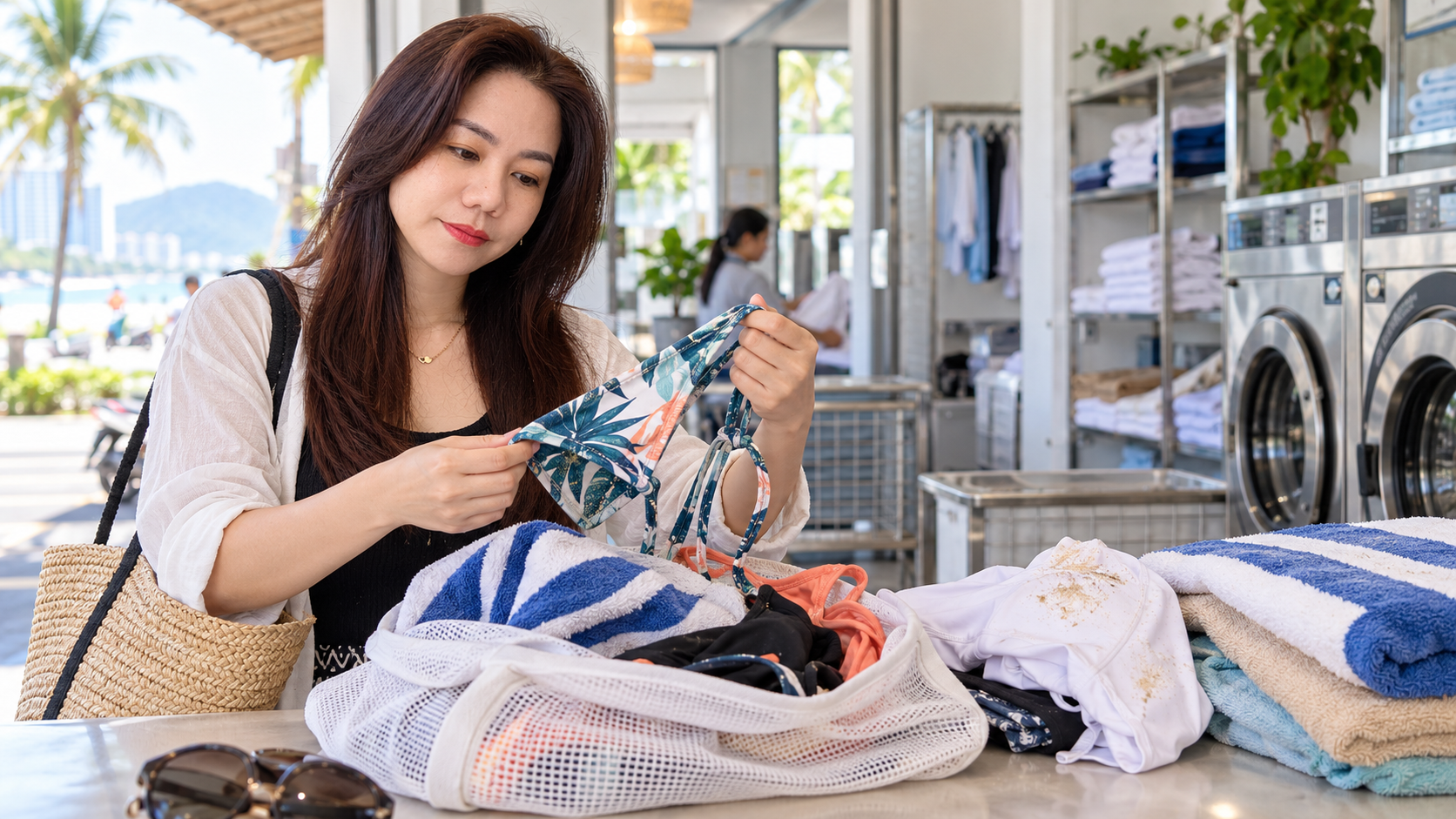
Prepare swimwear and beach towels by airing wet items, removing sand, identifying sunscreen marks and checking care labels before pickup.
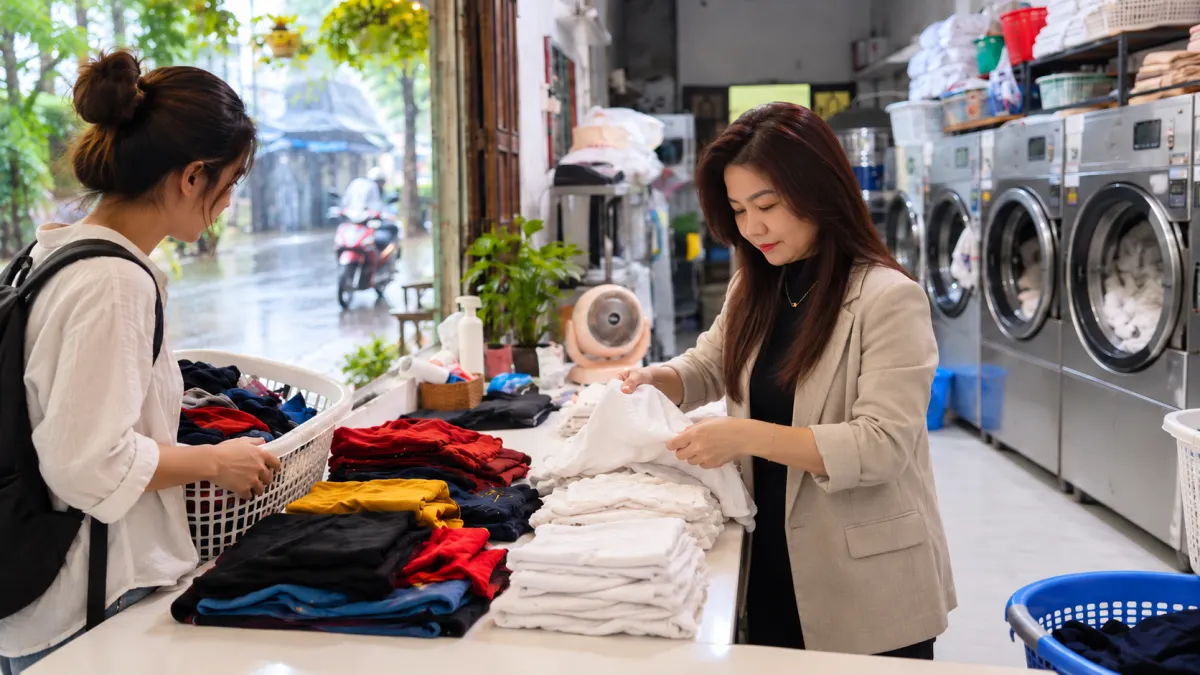
Learn when whites, dark colours and new garments should be separated, how care labels help and when a separation fee may apply.
Use this hotel-reception laundry checklist to label bags, remove valuables, confirm pickup details and check the returned order in Da Nang.