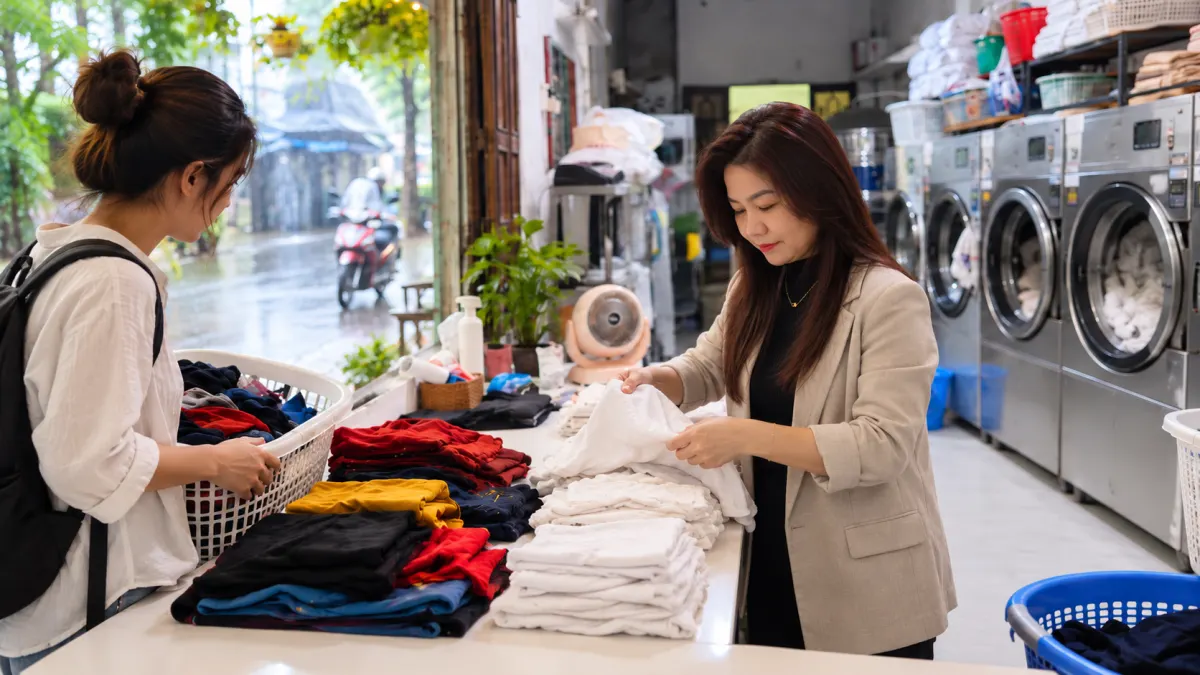
When to Separate White and Coloured Clothes for Laundry
Learn when whites, dark colours and new garments should be separated, how care labels help and when a separation fee may apply.
Prepare swimwear and beach towels by airing wet items, removing sand, identifying sunscreen marks and checking care labels before pickup.
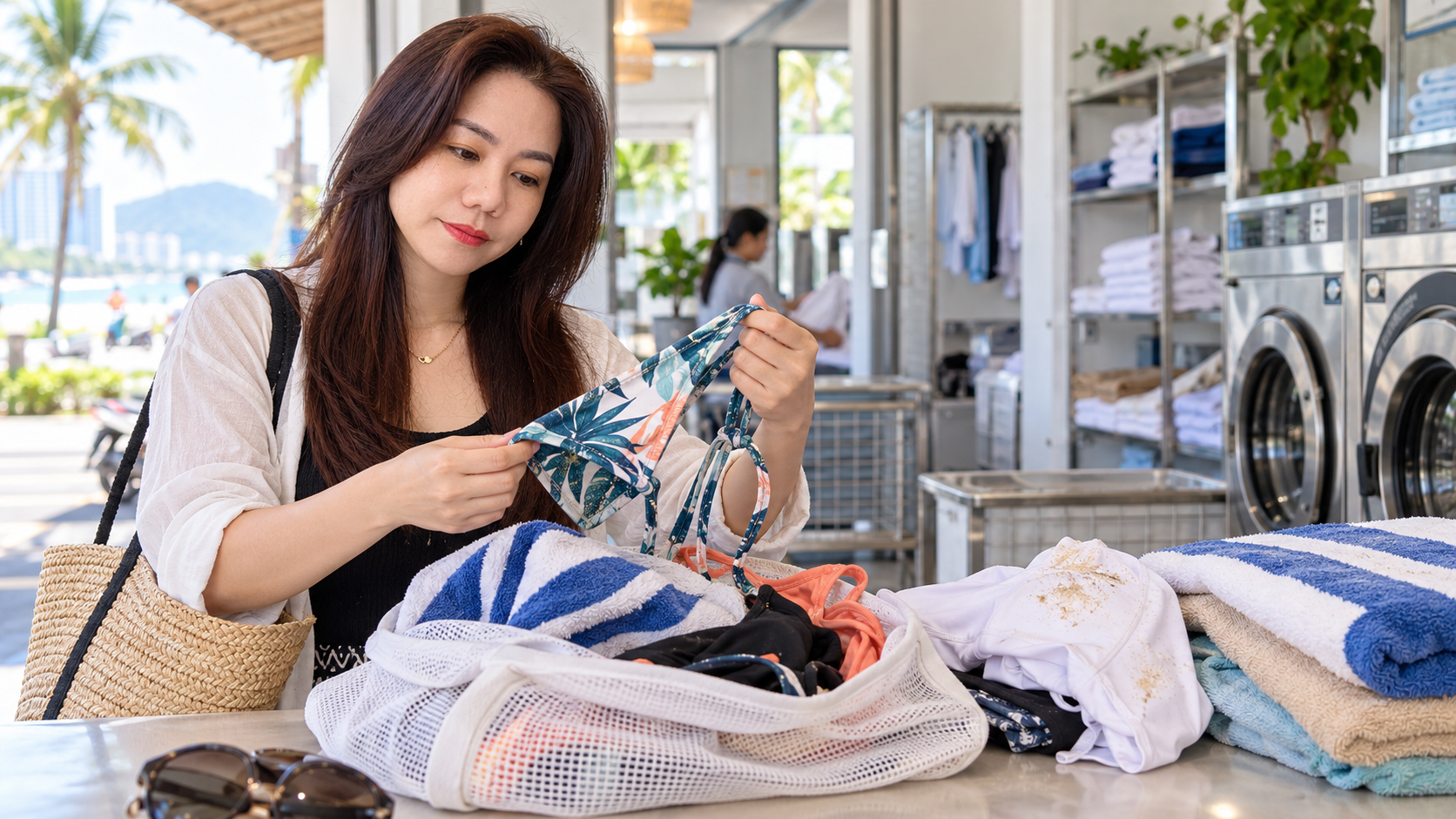
Laundry After the Beach in Da Nang: What to Check gives customers a practical way to prepare and confirm laundry service in Da Nang. Prepare swimwear and beach towels by airing wet items, removing sand, identifying sunscreen marks and checking care labels before pickup. The guidance prioritises care labels, the actual condition of each item and details confirmed in writing. It is intended to support a clear handover and realistic expectations, not to promise that every fabric, stain or special item can use the same process.
Start with laundry service in Son Tra and confirm the service details that apply to your order.
Wet swimwear and towels left in a sealed bag can develop odour and allow stains to set. After leaving the beach, spread them in a ventilated area when possible. If they must be packed for transport, arrange pickup soon and tell the laundry how long the items have remained wet so their condition is understood at handover.
Keep every instruction in the same booking conversation so pickup, processing and return teams use one record. Send a clear care-label photo when an item needs special handling.
Sand collects in pockets, hems and towel loops. Shake loose sand gently after the item has drained; do not scrub wet sand into stretch fabric. Check pockets and folds before bagging. Removing loose particles protects fabric surfaces and helps prevent sand from spreading through the rest of a mixed load.
A faster deadline must not override the manufacturer's care instructions. Ask the laundry to confirm what can be completed safely before the order is accepted.
Sunscreen and body oil may leave greasy marks on collars, straps and swimwear. Do not apply a strong remover without checking the label. Mark the area, photograph it in normal light and state when the stain occurred. The goal is to select a reasonable method, not to promise that every old mark can disappear completely.
Photos support an initial review but do not always show fabric, damage or moisture accurately. Final timing and price should follow the physical inspection and weighing.
Related guidance: laundry tips for travellers in Da Nang.
Swimwear often uses elastic fibres that are sensitive to heat and friction. Read the washing and drying symbols before placing it with ordinary clothing or cotton towels. Some pieces may require gentle washing or air drying. Priority timing should never override a label that prohibits tumble drying or high temperatures.
Remove valuables and record the number of bags before handover. A short written confirmation is useful when hotel reception is acting on the guest's behalf.
Thick beach towels retain water, release lint and usually need more drying time than swimwear. Keep them away from thin, light-coloured or lint-sensitive garments. If hotel towels and personal towels are together, identify ownership clearly so the returned order does not mix hotel property with the guest's belongings.
Separate priority items from special or delicate pieces. This makes it easier to return the essential clothes first without applying an unsuitable process to the whole bag.
Send photos before booking when an item has glued print, metal accessories, tears, mould, heavy oil marks or an unreadable label. Show the whole item, the care label and the affected area. Photos support an initial review, but final acceptance and timing depend on physical inspection when the order is collected.
Check the returned order before packing for travel. Allow warm items to cool in a ventilated space before placing them in an airtight suitcase.
If checkout is close, do not hide wet beachwear at the bottom of a suitcase. Drain it, keep it ventilated and tell the laundry the true condition. Very wet items can affect estimated weight and drying time, while a coated beach bag or water shoe may not be suitable for the same service as clothing. A quick photo review before pickup prevents the driver from collecting an order that cannot follow the requested deadline.
After return, inspect elastic straps, printed areas and thick towel edges. Allow warm pieces to cool before folding them tightly. If the next destination is humid, use a breathable packing layer until the fabric is fully cool. This final step is especially important when a guest receives the order through reception and plans to close the suitcase immediately for a flight or road trip.
Air wet items, shake out loose sand and divide swimwear from thick towels. Send photos of stains, damage and care labels, then state the hotel pin and required return time. Wait for Cherry Laundry to confirm which items can use the regular process and which need separate handling.
Only when the manufacturer's care label permits it. Many elastic or printed pieces need lower heat or air drying.
Shake out loose sand and separate thick, lint-producing towels from sensitive garments before handover.
No result should be guaranteed before inspection. Share a photo and let the laundry choose a label-compatible method.
A few minutes of preparation after the beach protects both the garments and the rest of the load. Air, sort, photograph and confirm before handing wet items to the laundry.
Next step: contact Cherry Laundry.
Service details may change. Reconfirm price, pickup range, capacity and the phone number shown on the official profile before publishing or booking.
The questions and answers below are automatically summarized from this article.
Confirm do not seal wet items. Confirm remove loose sand.
Wet swimwear and towels left in a sealed bag can develop odour and allow stains to set. After leaving the beach, spread them in a ventilated area when possible. If they must be packed for transport, arrange pickup soon and tell the laundry how long the items have remained wet so their condition is understood at handover. Keep every instruction in the same booking conversation so pickup, processing and return teams use one record. Send a clear care-label photo when an item needs special handling.
Sand collects in pockets, hems and towel loops. Shake loose sand gently after the item has drained; do not scrub wet sand into stretch fabric. Check pockets and folds before bagging. Removing loose particles protects fabric surfaces and helps prevent sand from spreading through the rest of a mixed load. A faster deadline must not override the manufacturer's care instructions. Ask the laundry to confirm what can be completed safely before the order is accepted.
Sunscreen and body oil may leave greasy marks on collars, straps and swimwear. Do not apply a strong remover without checking the label. Mark the area, photograph it in normal light and state when the stain occurred. The goal is to select a reasonable method, not to promise that every old mark can disappear completely. Photos support an initial review but do not always show fabric, damage or moisture accurately. Final timing and price should follow the physical inspection and weighing.
Swimwear often uses elastic fibres that are sensitive to heat and friction. Read the washing and drying symbols before placing it with ordinary clothing or cotton towels. Some pieces may require gentle washing or air drying. Priority timing should never override a label that prohibits tumble drying or high temperatures. Remove valuables and record the number of bags before handover. A short written confirmation is useful when hotel reception is acting on the guest's behalf.
More useful content about laundry service in Da Nang.
Learn when whites, dark colours and new garments should be separated, how care labels help and when a separation fee may apply.
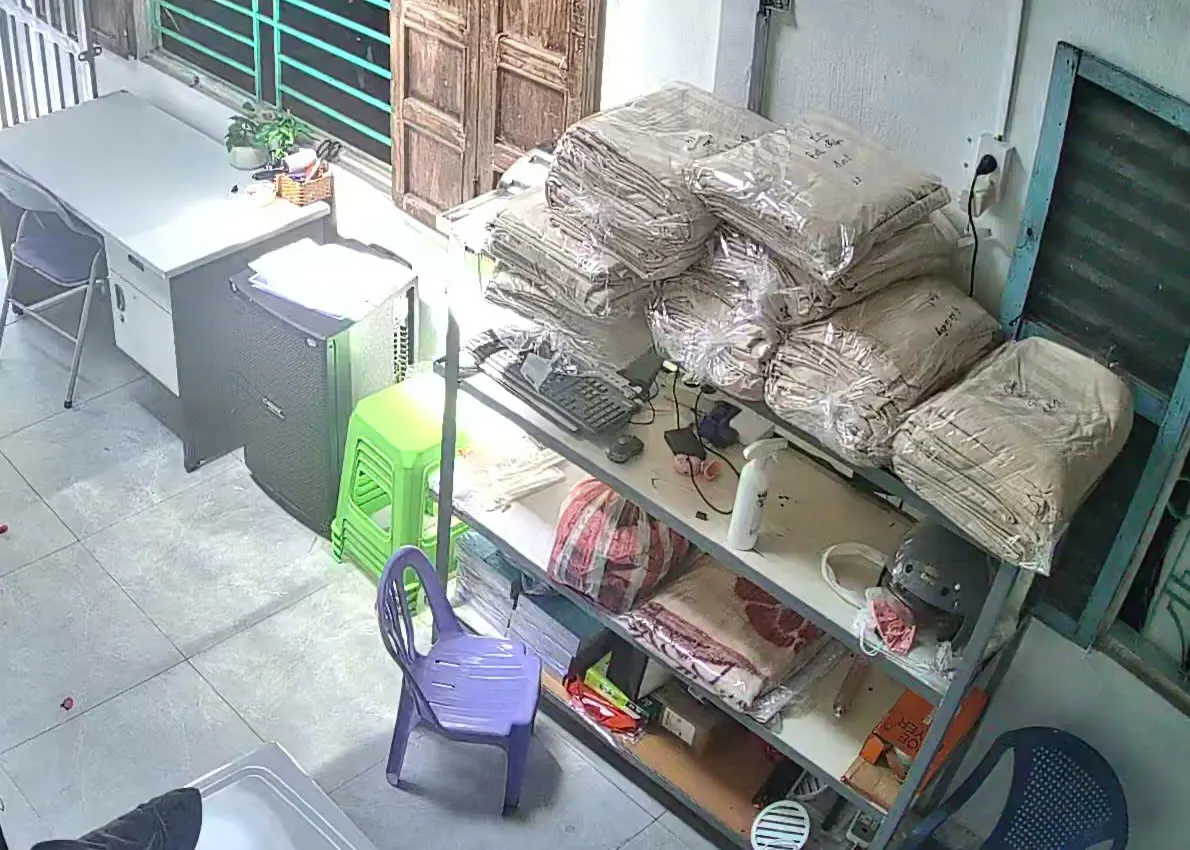
Use this hotel-reception laundry checklist to label bags, remove valuables, confirm pickup details and check the returned order in Da Nang.
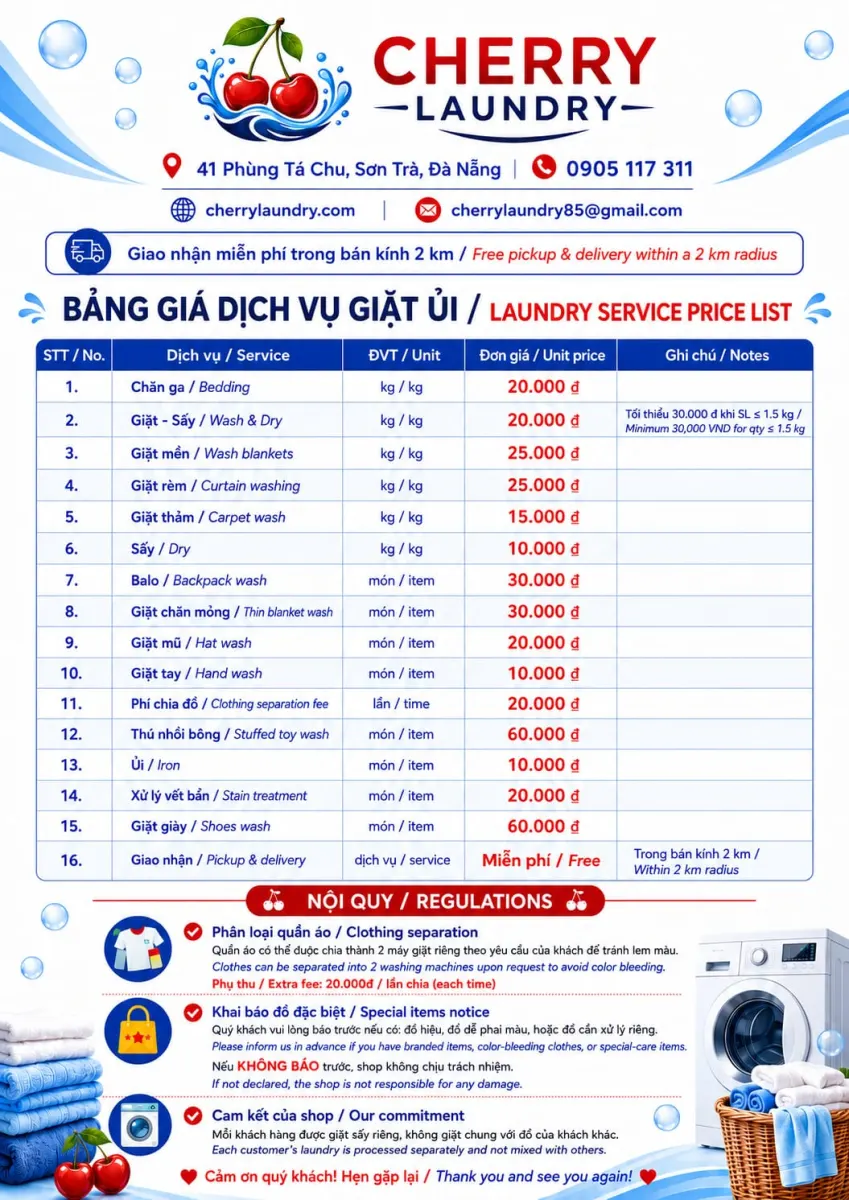
Learn about laundry prices by the kilogram in Son Tra, Da Nang, including VND 20,000/kg, minimum 1.5 kg, sorting fees and pickup delivery
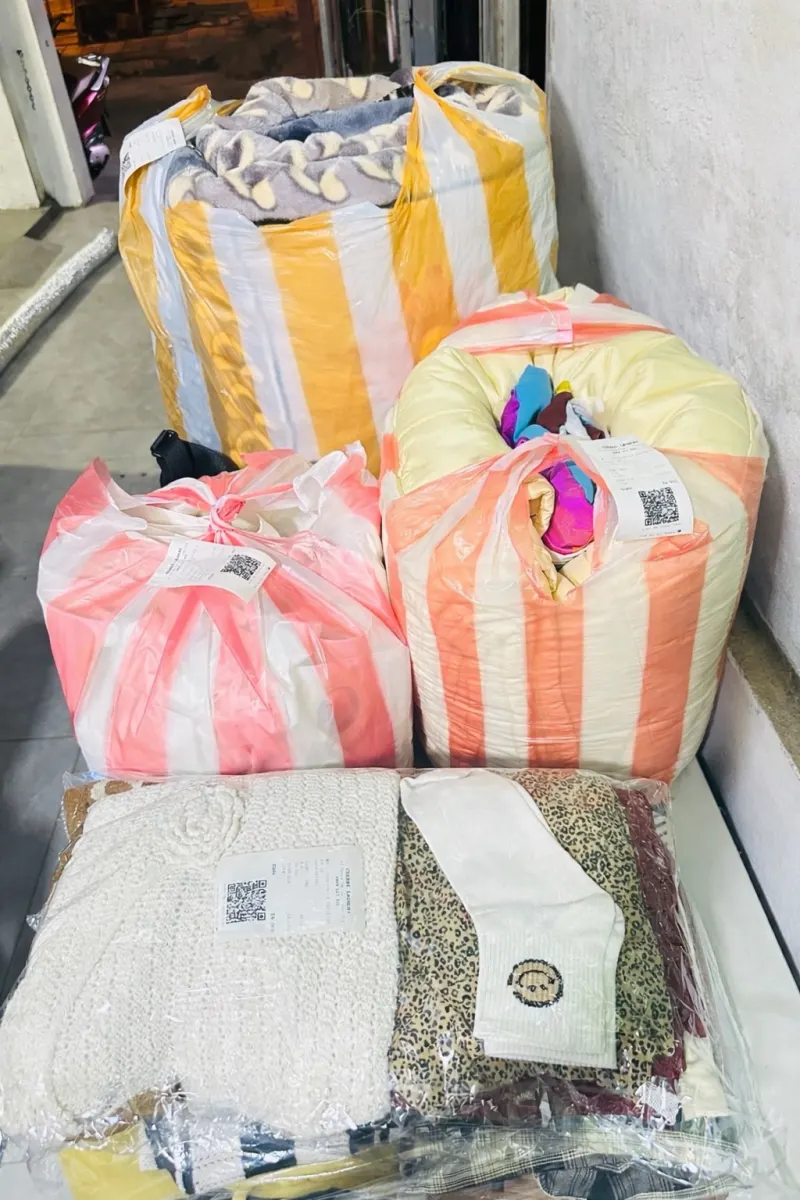
Looking for laundry service in Da Nang? Learn how to prepare and sort your clothes and use convenient laundry pickup and delivery while staying in Son Tra.